


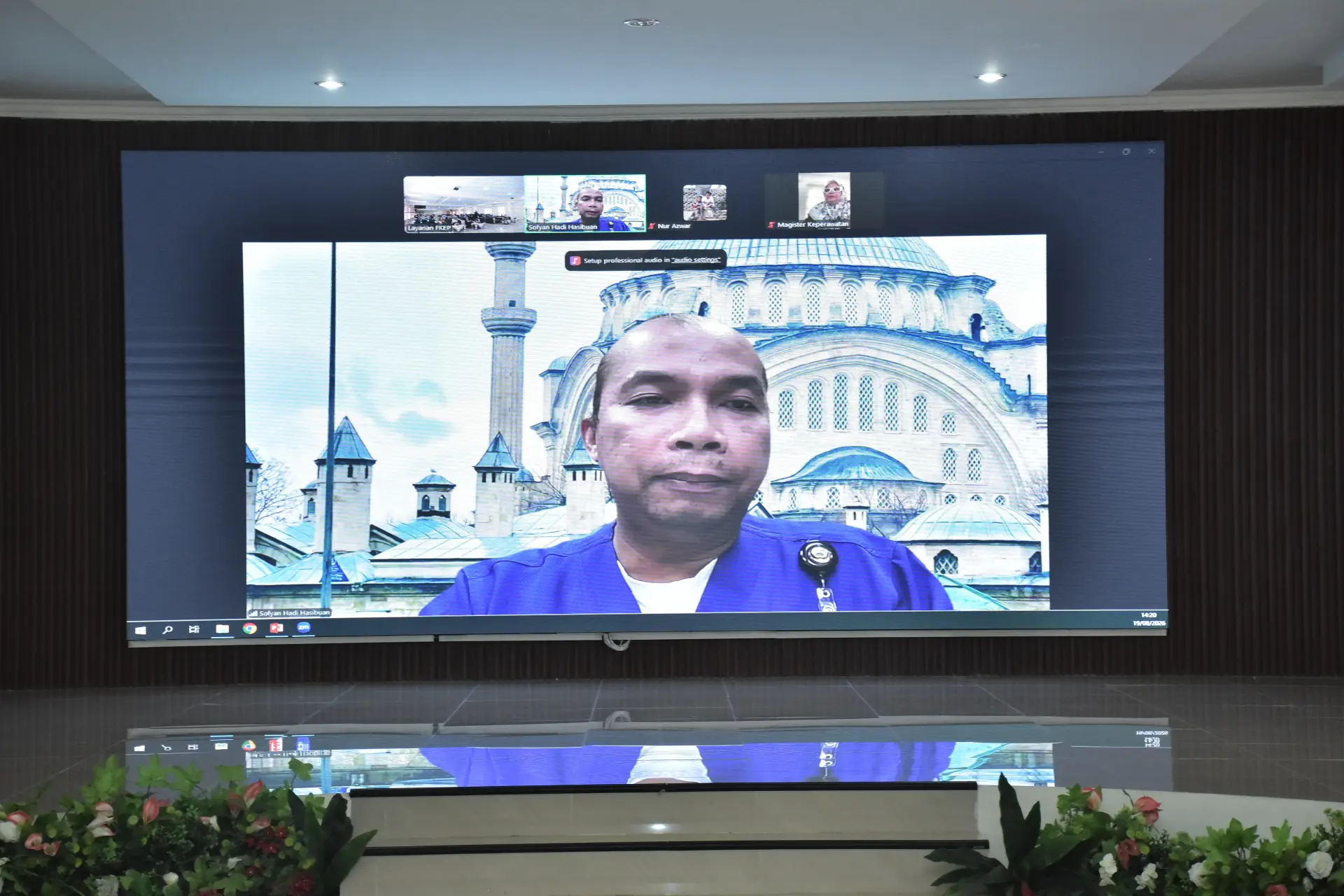
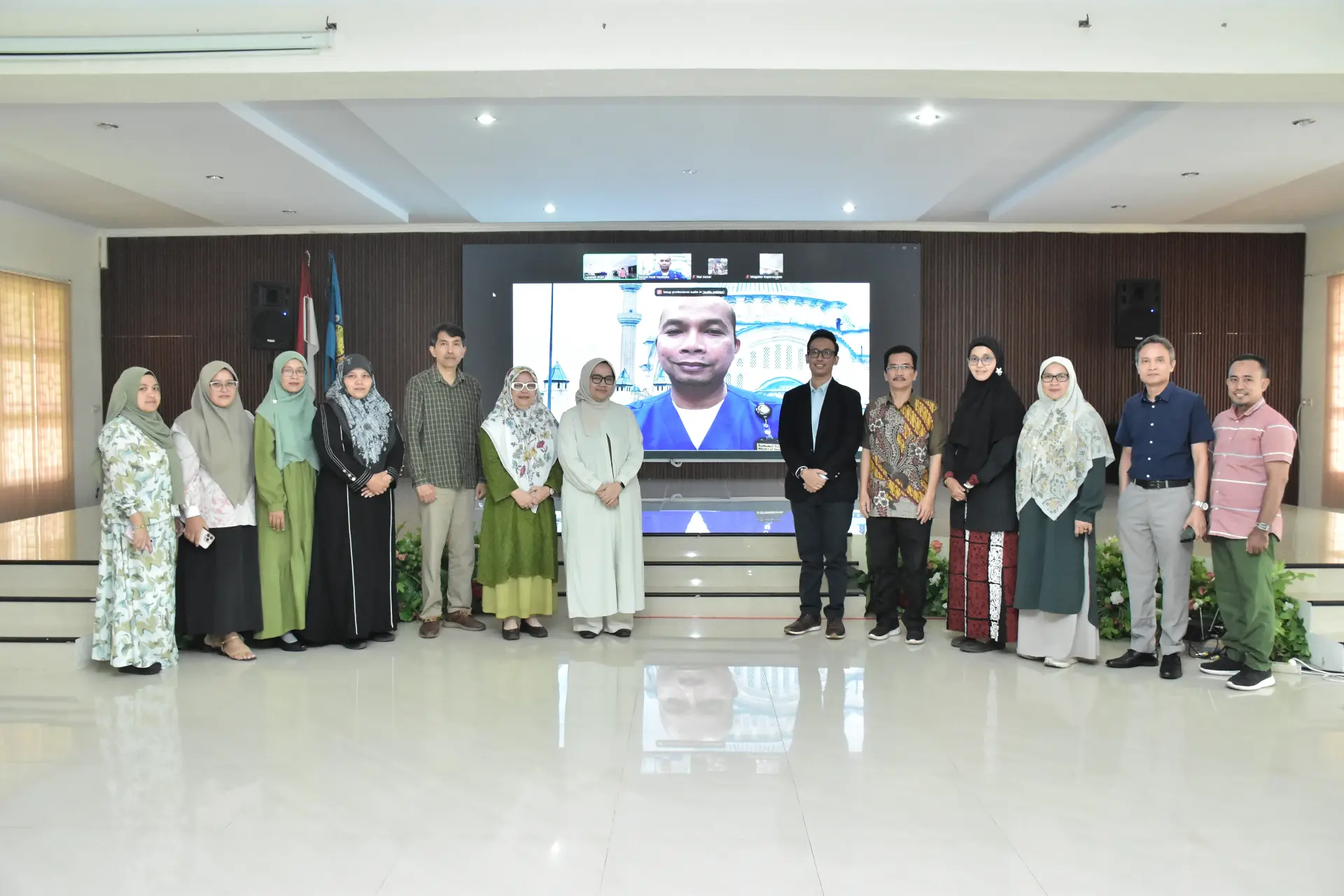
Medan, August 19, 2026 — The Faculty of Nursing, Universitas Sumatera Utara (USU), held the Hybrid Seminar on the Graduate Capacity Building Program for Working Abroad as part of its commitment to preparing graduates to compete in the global labor market. The event was attended by faculty leaders, faculty members, education staff, students, and alumni, and served as a platform for sharing firsthand experiences from nursing practitioners who have pursued international careers.
The first session, held from 2:00 to 3:00 p.m. WIB, featured Sofyan Hadi Hasibuan, BSN., Ns., MSN., Ph.D., who currently works at Al Razi Orthopaedic Hospital, Ministry of Health, Kuwait. Sofyan shared his professional experience regarding nursing employment opportunities in the Gulf region and explained key requirements, including an active Nursing Registration Certificate (STR), work experience, BLS certification, English proficiency, as well as the recruitment process and adaptation to the work culture of international hospitals. He emphasized that professional competence and mental preparedness are essential foundations for pursuing a successful career abroad.
The second session, held from 3:00 to 4:00 p.m. WIB, featured Anggriawan, S.Kep., Ners., M.Kep., who discussed the growing global demand for nurses, which is projected to continue increasing through 2030. He emphasized the importance of foreign-language proficiency, international certifications such as NCLEX-RN and Prometric, and the ability to adapt to healthcare cultures and service ethics. Anggriawan also reminded participants to choose legal placement pathways and avoid fraudulent employment practices.
The seminar continued from 4:00 to 5:00 p.m. WIB with Sofi Ramadhanti Silalahi, who presented the Indonesia–Japan Government-to-Government (G to G) scheme for nurses (Kangoshi) and careworkers (Kaigofukushishi). Participants gained an understanding of the registration process through SISKOP2MI, selection procedures, matching with healthcare facilities in Japan, pre-departure training, and Japanese workplace culture, which emphasizes the principles of 5S, Hō-Ren-Sō, and Kaizen as foundations for professional and high-quality healthcare services.
Through this seminar series, the Faculty of Nursing, USU, strengthened its commitment to supporting the Sustainable Development Goals (SDGs), particularly SDG 3: Good Health and Well-being through improving the quality of the healthcare workforce; SDG 4: Quality Education through strengthening graduate competencies; SDG 8: Decent Work and Economic Growth by providing safe and professional access to international career opportunities; and SDG 10: Reduced Inequalities by promoting equitable mobility for Indonesian healthcare professionals. The activity is expected to provide graduates with practical preparation for pursuing global careers while upholding the reputation of the Indonesian nursing profession.